
Arq Kasni Benefits, Uses, Ingredients & Dosage
By Aslam Dawakhana · 19 Aug 2026
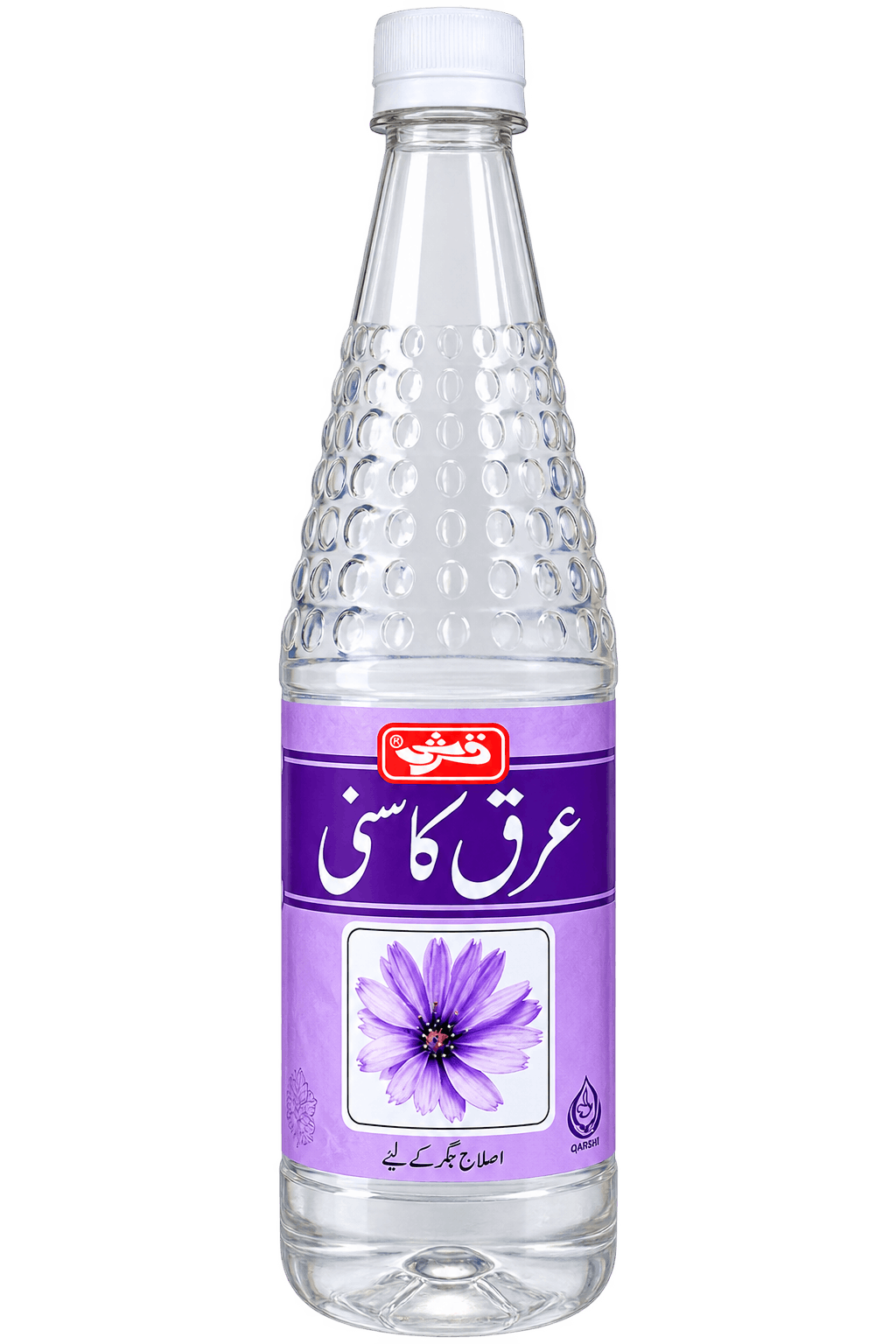
Arq Kasni Benefits: Uses, Ingredients, and Traditional Benefits
Arq Kasni is a traditional Unani herbal preparation made from Kasni (Cichorium intybus), commonly known as chicory. Kasni has a long history of use in traditional medicine, particularly in formulations associated with digestion, appetite, and liver-related wellness. Modern research has also identified compounds such as inulin, polyphenols, caffeic-acid derivatives, and sesquiterpene lactones in chicory, although evidence for specific medical benefits varies.
If you are searching for Arq Kasni benefits, this guide explains what Arq Kasni is, its traditional uses, potential benefits, ingredients, how it is commonly used, and important safety considerations.
What Is Arq Kasni?
Arq Kasni is a traditional Unani preparation associated with Kasni, or Cichorium intybus L., a flowering plant from the Asteraceae family.
Kasni has been used in different traditional medical systems for centuries. Reviews of Unani literature describe the leaves, seeds, and roots of Kasni as traditionally used for purposes including digestive support, appetite, and liver-related complaints.
It is important to distinguish traditional use from clinically proven treatment. Research on chicory has identified several potentially bioactive compounds, but the evidence is not strong enough to consider Arq Kasni a replacement for medical treatment.
Arq Kasni Benefits
The following benefits are best understood as traditional uses and potential supportive effects, rather than guaranteed medical benefits.
1. May Support Healthy Digestion
One of the most relevant areas of interest around Kasni is digestive health.
The European Medicines Agency recognizes the traditional use of chicory root for mild digestive complaints such as feeling full, flatulence, and slow digestion. This conclusion is based on long-standing traditional use rather than strong clinical-trial evidence.
Kasni is therefore traditionally associated with supporting comfortable digestion.
2. Traditionally Used to Support Appetite
Chicory root has also been traditionally used for temporary loss of appetite. The EMA specifically includes this traditional use in its assessment of chicory root preparations.
This does not mean Arq Kasni should be used to treat unexplained or persistent loss of appetite. Such symptoms can have many underlying causes and may require medical evaluation.
3. Traditionally Associated With Liver Wellness
Kasni has a long history in Unani medicine, where different parts of the plant have traditionally been used for liver-related complaints.
Reviews of Kasni describe traditional hepatoprotective use and discuss research investigating possible liver-supporting activity. However, much of the evidence comes from laboratory or preclinical research, so it should not be interpreted as proof that Arq Kasni treats liver disease.
4. Contains Naturally Occurring Inulin
One notable component of chicory is inulin, a type of dietary fiber. Chicory root is recognized as an important natural source of inulin.
Inulin is of particular interest because of its role as a fermentable dietary fiber. Research has examined chicory-derived inulin in relation to digestive and bowel-health effects.
However, the amount of inulin in a particular Arq Kasni preparation can vary, so the benefits demonstrated for purified or standardized chicory inulin should not automatically be attributed to every Arq Kasni product.
5. Traditionally Used for Digestive Discomfort
Traditional literature associates Kasni with various gastrointestinal uses, including digestive problems and lack of appetite.
This makes digestive wellness one of the most relevant topics when discussing Arq Kasni benefits.
6. Contains Various Plant Bioactive Compounds
Scientific reviews have identified several compounds in Cichorium intybus, including:
- Inulin
- Polyphenols
- Flavonoids
- Caffeic-acid derivatives
- Sesquiterpene lactones
- Chlorogenic acid-related compounds
These compounds have been investigated for different biological activities in laboratory and preclinical studies.
Research interest, however, does not necessarily mean that consuming Arq Kasni produces the same effect in humans.
What Is Kasni?
Kasni is the traditional name used for Cichorium intybus, commonly called chicory.
It is a perennial herb that grows across several regions of Europe and Asia and has been used as both a food plant and traditional medicinal herb. Its root is also an important source of inulin.
In Unani literature, different parts of Kasni—including the leaves, seeds, and roots—have been discussed for various traditional uses.
Arq Kasni and Digestive Health
If your main reason for looking into Arq Kasni benefits is digestion, Kasni has a particularly long traditional history in this area.
Traditional use of chicory root includes mild digestive complaints such as:
- Feeling of fullness
- Flatulence
- Slow digestion
- Temporary loss of appetite
The EMA classifies these as traditional-use indications, meaning the evidence is based primarily on long-standing use rather than robust clinical trials.
For persistent abdominal pain, severe bloating, vomiting, blood in the stool, unexplained weight loss, or ongoing digestive problems, medical evaluation is more appropriate than relying on an herbal preparation.
Arq Kasni Ingredients
The exact ingredients of Arq Kasni depend on the manufacturer and preparation method.
The primary herbal ingredient associated with the product is Kasni (Cichorium intybus). Different preparations may use different parts of the plant and may differ in concentration.
Before purchasing or using Arq Kasni, check the product label for:
- Ingredient list
- Plant name
- Net quantity
- Manufacturer
- Directions for use
- Batch information
- Expiry date
This is especially important because products sold under similar names may not have identical formulations.
How to Use Arq Kasni
There is no universal dosage that applies to every Arq Kasni product.
The appropriate amount depends on the specific formulation and manufacturer's instructions. Therefore:
- Read the product label carefully.
- Follow the recommended serving or dosage.
- Do not exceed the stated amount.
- If you are taking medicines or have an existing medical condition, ask a qualified healthcare professional before use.
Do not assume that the dosage of one Kasni preparation applies to another.
Is Arq Kasni Safe?
Kasni has a long history of traditional use, but scientific safety information for specific preparations can be limited. A major review notes that toxicological data on Cichorium intybus are still limited. It also highlights the possibility of hypersensitivity reactions because chicory belongs to the Asteraceae family, which contains plants associated with allergies.
Use extra caution if you:
- Have a known allergy to chicory or related plants.
- Are pregnant or breastfeeding.
- Take prescription medicines.
- Have a chronic medical condition.
- Are considering using it for a specific disease rather than general wellness.
If you develop an allergic reaction or other unusual symptoms after using the product, discontinue it and seek appropriate medical advice.
Arq Kasni vs Kasni
These terms are related but do not necessarily mean the same thing.
Kasni refers to the plant, Cichorium intybus.
Arq Kasni refers to a traditional liquid preparation associated with Kasni.
The preparation method can affect the compounds present in the final product, so research conducted on raw Kasni, chicory root, or concentrated chicory extract should not automatically be interpreted as research on Arq Kasni itself.
Frequently Asked Questions
What are the benefits of Arq Kasni?
Arq Kasni is traditionally associated with digestive wellness and appetite support. Kasni itself has also been traditionally used in Unani medicine for liver-related and digestive complaints. Scientific research has identified several bioactive compounds in chicory, but evidence for specific therapeutic effects remains limited.
What is Arq Kasni used for?
It is traditionally used as a herbal preparation associated with digestive and general wellness. Specific uses depend on the formulation and traditional system of medicine.
Is Arq Kasni good for digestion?
Kasni has a long history of traditional use for mild digestive complaints. The EMA recognizes traditional chicory-root use for symptoms such as fullness, flatulence, and slow digestion.
What is Kasni?
Kasni is Cichorium intybus, commonly known as chicory. Its root is also an important natural source of inulin.
Does Arq Kasni treat liver disease?
It should not be marketed as a treatment or cure for liver disease. Kasni has traditional liver-related uses and has been investigated in preclinical research, but this does not establish that Arq Kasni treats liver disease in humans.
Can I use Arq Kasni every day?
Daily use depends on the particular product and its recommended directions. Follow the manufacturer's instructions and consult a healthcare professional if you have a medical condition or take regular medication.
Final Thoughts
Arq Kasni benefits are best understood through both traditional Unani use and the available scientific evidence. Kasni (Cichorium intybus) has a long history of traditional use, particularly in connection with digestion and appetite, while modern research has investigated compounds such as inulin, polyphenols, and sesquiterpene lactones.
The strongest evidence available for digestive use is still characterized as traditional use, rather than definitive clinical proof.
If you want to use Arq Kasni as part of your herbal wellness routine, choose a properly labeled product, follow its directions, and seek professional advice when you have an existing health condition or take medicines.
Explore Arq Kasni from Aslam Dawakhana: